Friday puzzle

Spring is coming…and soon herbaceous perennials will poking their leaves up through the mulch:
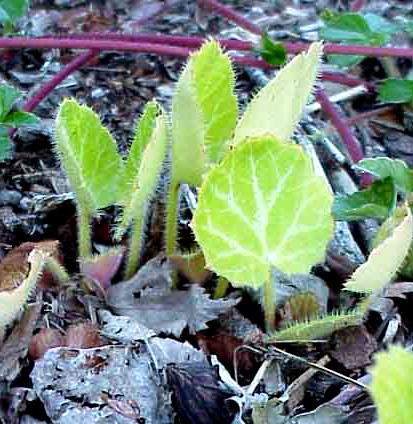
Obviously as leaves first emerge they’ll be vertically oriented – but these ones have remained vertical days after emerging.  Eventually they’ll become horizontal.  But today’s question is – what’s the advantage in remaining vertical?  And what’s this phenomenon called?

Answer on Monday – have a nice weekend!
Odds ‘n Ends

Some odds and ends today that I either #1 was asked to post or #2 couldn’t resist posting.  First for the picture that I was asked to post.

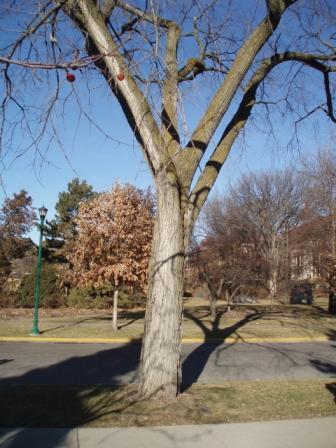
This, as far as we can tell (we being myself, my technician, and our grounds department), is the American elm tree that was being planted in that picture from 1909 which I posted on January 21.  Dutch elm disease was devastating here in the mid 1900s as it was everywhere, but this region of the world was lucky and there were a number of escapes — and resistant trees (that’s an ongoing project of mine — working with DED resistant elms — I’ll probably post more about it this spring). … Continue reading this article “Odds ‘n Ends”

Mistaken Identity, or The Truth?

In the wake of The Garden Professors’ sudden notoriety (see Linda’s Jan. 26 post), my department head sent out a very kind e-mail announcement to our faculty, staff, and grad students. 

However, he referred to us as the "Hort Professors" blog, sans hyperlink. 

A curious staff member (the lovely and talented Pris Sears) searched that title, resulting in the following:

Hort Professors, Hot Professors…kind of the same thing. Thanks, Google! 

“Being wrong” counterpoint

I haven’t finished with the water droplets story yet – but I just had to add some more evidence to the tree planting discussion from last week.

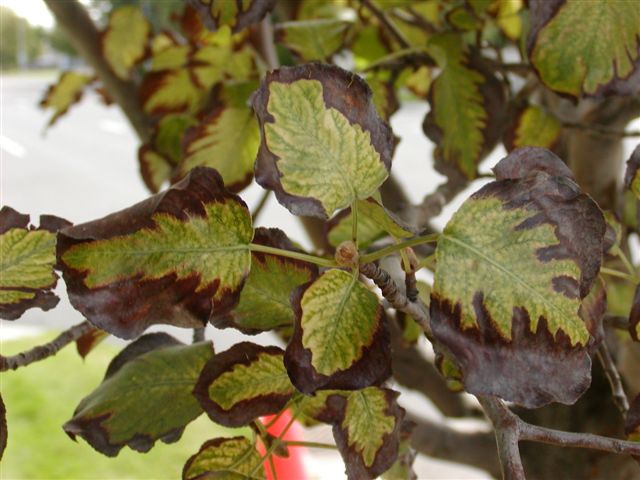
Consider this series of photos below.  This is a street tree in Kennewick, WA (in the southeastern part of the state, where summers can be intensely hot and dry).  Every spring, this tree leafs out just fine – and every summer the leaves suffer marginal and tip scorch.  This is a classic symptom of chronic drought:

As an amenity, the tree fails. … Continue reading this article ““Being wrong” counterpoint”

The evolution of tree care

I’m one of those people who can’t resist things that are free.  When you pass a yard that has a ‘FREE’ sign on a rusted-out lawn mower or an old piece of exercise equipment and wonder, “Who on earth would take that home?” Uh… that would be me.  Actually, I blame my dad.  The Old Man’s garage was crammed full with outboard motors missing pull-cords, mismatched lawn furniture, and all manner of secondhand tools in varying states of disrepair.… Continue reading this article “The evolution of tree care”

Friday Physiology Fun Followup

Astute readers pointed out several morphological adaptations found in drought-tolerant turf weeds:  fleshy taproots, reflective leaf surfaces, etc.  What we can’t see is what many of these plants do physiologically – and that’s photosynthesize using a biochemical pathway that temperate turfgrasses don’t possess. 

This pathway, called C4 photosynthesis, contains some extra preliminary steps not found in plants using traditional (C3) photosynthesis.  The downside:  it takes more solar energy for the plant to photosynthesize.  The upside:  these extra steps allow the plant to "fix" carbon (transforming it from gas to solid) faster, especially when it’s sunny, warm, and droughty. … Continue reading this article “Friday Physiology Fun Followup”

Friday physiology fun

It’s still cold and wintery, so let’s imagine ourselves in a happy place…warm, sunny, dry…with dead lawns.

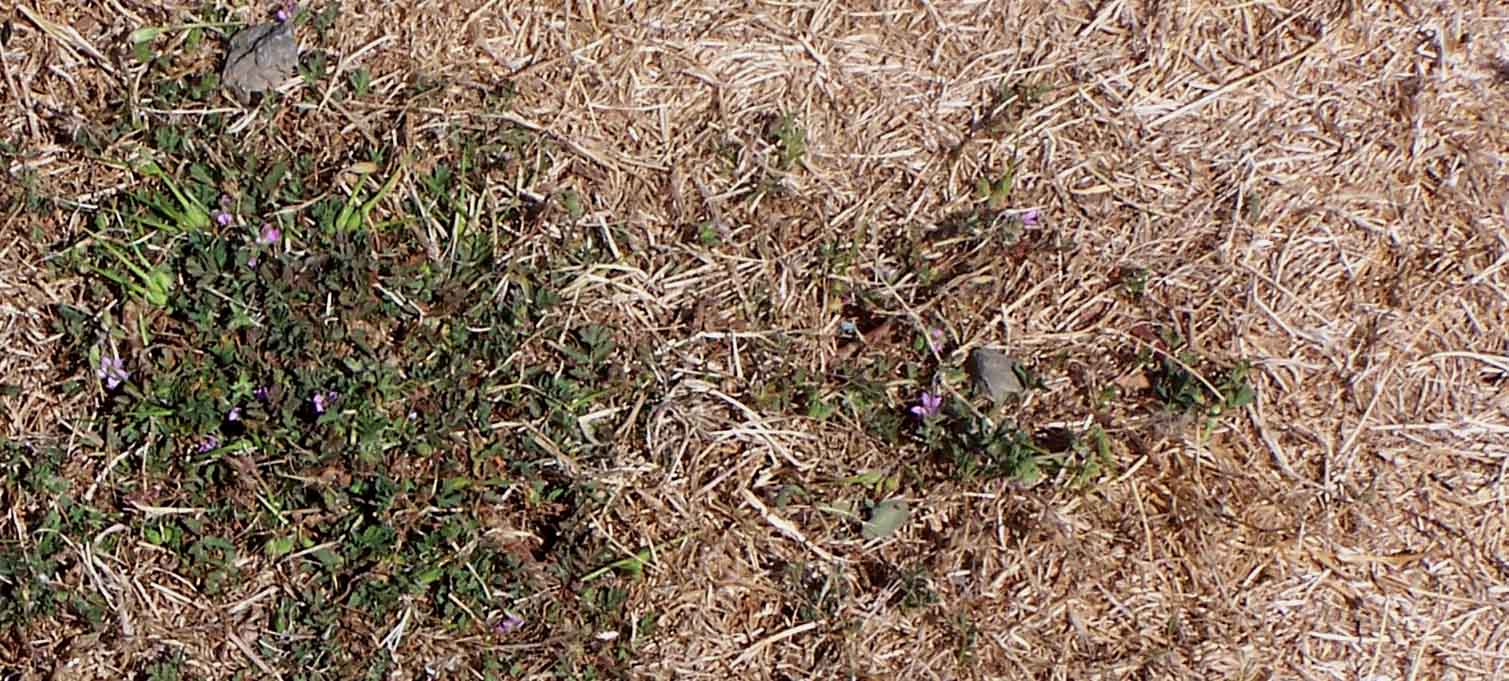
As the photo shows, the turfgrass is dead; this happens every summer during the Pacific Northwest’s droughty summers.  Yet many of the weedy species are obviously thriving.  Why?

Remember, this is a physiology quiz.  You can discount herbicides, fertilizers, etc.  This is a cool (no pun intended) adaptation that many species native to dry, subtropical to temperate environments possess.  … Continue reading this article “Friday physiology fun”

Making a difference?

I promise I’ll post a Friday puzzle later.  But I just had to let you know that if you Google “water droplets burn leaves” (without quotes) you’ll get 436,000 hits as of this morning.  Number 3 on the list?  Our blog!

I think I’ll discuss this paper one more time on Wednesday – there are several other serious issues that I think are worth mentioning.

Have a good weekend!

Being Wrong

The thing about being a horticulturist and a professor is that you’re always supposed to have the right answer.  Which is to say, when I tell people not to use beer as a fertilizer, to avoid planting trees too deeply, and to reduce pesticide use, people take it for granted that I know what I’m talking about and that, if they don’t do what I say, there could very well be problems.  But, as most of you know, growing plants is an art and a science, and sometimes plants decide to do things that are unexpected — plants are individuals after all, just like we are. … Continue reading this article “Being Wrong”