Cool website with info on amendments

Not to horn in on Bert’s posting day….but I was just sent this link to Iowa State’s compendium of research reports on nontraditional materials. Though this database is targeted towards crop production methods, there may be nuggets of information relevant to home gardens as well. And it includes a product list if you’re not sure what to put into the search box.

Unfortunately, the collection is focused on north central USA, but look at the filter a report or article has to go through to make it onto the site:

Criteria for inclusion of a research report or abstract in the compendium includes: 1) at least two site-years of research, with multiple crops or varieties substituting for a site-year; 2) authors listed; 3) replicated with statistical analysis; 4) reasonably applicable to north central USA crop production; 5) reference source available; and 6) author permission.… Continue reading this article “Cool website with info on amendments”
For “entertainment value” only

So reads the sticky note from my retired entomologist colleague.  It’s affixed to the latest flyer promising the "greenest garden in town" using the "best all-time tips, tricks and tonics."

The entire brochure is ludicrous, and picking it apart is like shooting fish in a barrel. But sometimes it’s fun going for the low-hanging fruit. Here are some of the more memorable claims:

Epsom salts – grow sweeter melons, energize your roses, supercharge your grass seed, grow giant geraniums, bust tomato blight, boost your bulbs, force stubborn shrubs to flower, etc.… Continue reading this article “For “entertainment value” only”

Up and running again

Over the weekend our blog was inaccessible.  The server room in Pullman (where this blog is housed) overheated and everything was shut down.  I apologize to those of you who tried to comment and/or post.  Things are back to normal, at least for the time being.

The ugly side of compost

In my part of the world we’re able to send most of our organic stuff through the green cycling program, where it ends up being made into compost.  Cedar Grove contracts with the City of Seattle to do this service.  As you might imagine, this requires huge, multiple facilities to handle all of the organic material that comes through the system.  And it’s not difficult to imagine that problems arise, especially in choosing locations for these sites.… Continue reading this article “The ugly side of compost”

MossTiles – a really bad idea

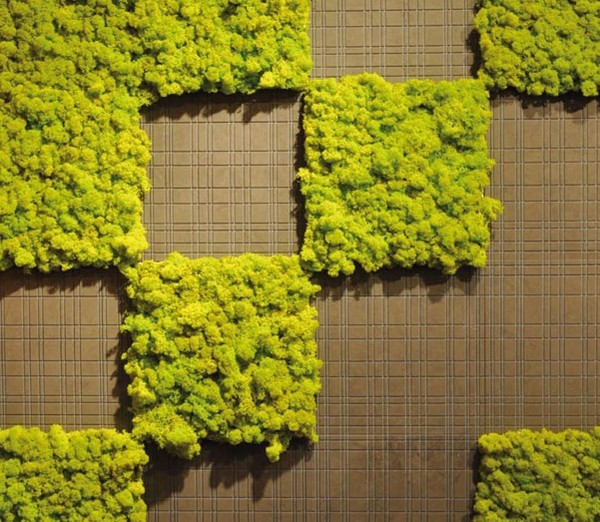
A few months ago a colleague alerted me to MossTiles, which can be attached to walls to create interior vertical gardens. They look really cool, and I assumed they consisted of some tough little moss species rooted in a mesh-enclosed planting mix. But the more I read about them, the more confused I became. They don’t need light – or fertilizer – or water (though misting them occasionally is recommended). More investigation was in order.

It turns out that these aren’t made from moss at all, but lichens – specifically reindeer moss (Cladonia rangiferina).… Continue reading this article “MossTiles – a really bad idea”

Pest Alert for western Washington – late blight

I know most of you are not residents of western Washington, but this information might be of interest to gardeners everywhere.

Pest: Late blight (Phytophthora infestans)

Hosts at risk: Tomato and potato

Conditions of risk: cool, moist environment

Found: Images typical of late blight infection on tomato have been submitted from two Puget Sound area (King/Snohomish county) farms.   Growing conditions were plants in field soil where the area was covered with a plastic hoop structure.… Continue reading this article “Pest Alert for western Washington – late blight”

Why I don’t like cardboard mulch

I’ve discussed my dislike of cardboard mulch before: like other sheet mulches it restricts water and gas transfer between the soil and atmosphere. In published comparison studies, other mulch choices generally outperform cardboard in terms of plant growth, weed control, etc. But there’s one area where cardboard is tops compared to every other mulch material tested.

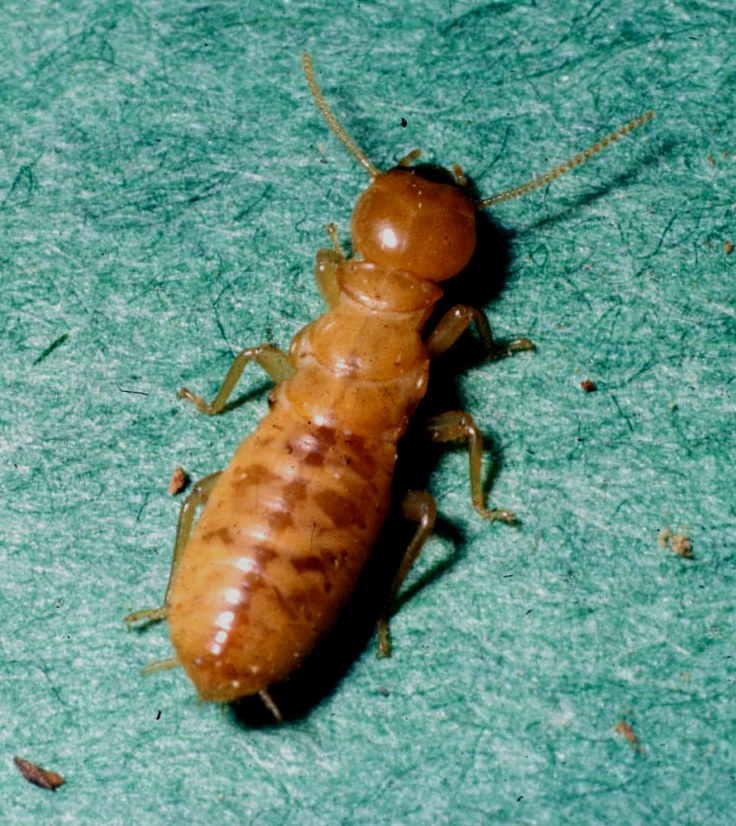
Termites.


Termites LOVE cardboard. Did you know that termite researchers use cardboard feeding stations to lure termites? And cardboard is often used as the “control” in feeding studies, because termites will always eat it?… Continue reading this article “Why I don’t like cardboard mulch”

Groundcovers for gaps

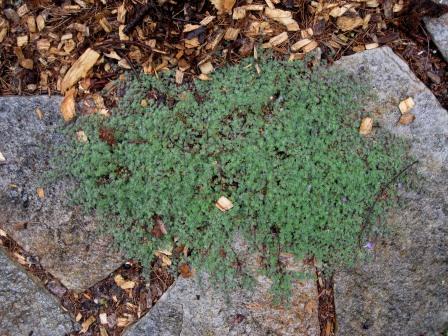
I promised on last week’s post that I’d mention some other low-input methods of keeping weeds out of the gaps between paving stones.  Here are a few photos of my own yard, where we’ve been installing flagstone pathways and terraces.  (Money-saving hint: check out craigslist and/or freecycle for free pavers and other types of stone.  We got all of ours free – just had to pick them up.)

We bought flats of groundcovers, such as woolly thyme, Irish moss, and blue star creeper.  … Continue reading this article “Groundcovers for gaps”

Hot new method of weed control?

There’s a new report out from University of Copenhagen on killing weeds between paving stones. What they recommend is burning or steaming the weeds lightly and repeatedly. Boiling water, steam, even flamers can be used to wilt the leaves over the course of several treatments (six was recommended). This process damages the leaves beyond repair, slowly starving the roots to death.

I’m not sure exactly how I feel about this study (which is getting a lot of attention on the internet).… Continue reading this article “Hot new method of weed control?”

The Pop-n-Drop method of planting shrubs

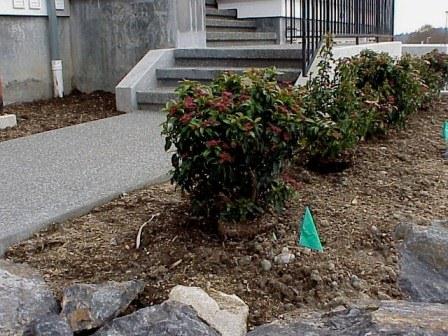
One of the planting practices that severely vexes me is the Pop-n-Drop (TM) method, where plants are popped out of the container and dropped into a hole roughly the same size.  When I’m lucky enough to find such installations in progress, I try to take as many photos as possible for later comparisons.  Here’s one such landscape that was installed in this manner:


A row of Pop-n-Drops in 2002

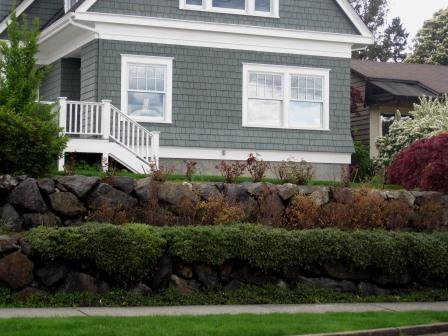
And here’s the same landscape 10 years later:


Two rows of Pop-n-Drops in 2012

Some of the shrubs survived, some did not, and certainly none of them are thriving.  … Continue reading this article “The Pop-n-Drop method of planting shrubs”