Buying lady beetles and mantids for your home gardens is probably not the best pest control strategy

Biological control is the use of natural enemies such as predators, parasites/parasitoids, and pathogens of pests in order to suppress or control them. This is a great tool for pest control and we hear about biological control a lot, especially when we talk about IPM (Integrated Pest Management). It usually comes with the classic imagery of a hungry lady beetle (often incorrectly referred to as the lady ”bug”) munching on aphids.
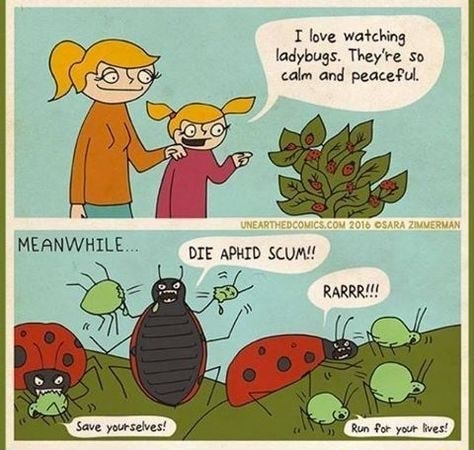
Cartoon of lady beetles munching on aphids by Sara Zimmerman (unearthedcomics.com)
Continue reading this article “Buying lady beetles and mantids for your home gardens is probably not the best pest control strategy”

No Mow May: Is it a good idea?

I know what you’re thinking: “No Mow May? But it’s March!” Although spring currently seems like a distant wonder for us here in Montana, many of our warmer states are seeing the signs of spring that get you thinking about, among other things, your lawns (and if you’re a bee enthusiast like myself, you’re also thinking about the early season pollinators that are beginning to emerge in these landscapes).

What is ‘No Mow May’?

No Mow May (or April, or March- depending on where you are) is a movement that was originally made popular through an organization based out of the United Kingdom called Plantlife.… Continue reading this article “No Mow May: Is it a good idea?”

Pest Profile: Spotted Lanternfly

We have seen many high-profile examples of insect invasions, and as gardeners, we have probably come across some of these species in our very own landscapes and experienced their impacts first-hand.

If you live in the Eastern part of the United States, you have probably already heard about one of these invasive insect species that is currently wreaking havoc. The Spotted Lanternfly (SLF), Lycorma delicatula, is a 1 inch long planthopper native to China, and has since spread to Japan, South Korea, and the United States.… Continue reading this article “Pest Profile: Spotted Lanternfly”

Bee Lawns: What’s all the buzz about?

A bee lawn is a way to benefit pollinators in our landscapes by providing additional floral resources, and often utilizes a mix of low-growing flowering plants in addition to turf species. Although flower gardens also provide flowering plants for pollinators, bee lawns can be multi-functional in their usability for recreational purposes with the added benefit of providing food for bees.

Habitat loss is one of the major factors implicated in the global declines of native bee species.… Continue reading this article “Bee Lawns: What’s all the buzz about?”

Creating artificial nesting structures for cavity nesting solitary bees

Pollinators, especially bees, are an important part of our agriculture, economy, and ecosystems. Gardeners are often well-versed in the importance of bees since we get the opportunity to see these incredible animals in action. We enjoy the results of their labor in the form of fruits, “vegetables”, and seeds which feed wildlife and create beauty and interest in our gardens. In North America alone, there is an estimated 4000 species of native bees, and an estimate of over 20,000 species around the world.… Continue reading this article “Creating artificial nesting structures for cavity nesting solitary bees”

The ABC’s of Plants for Bees!

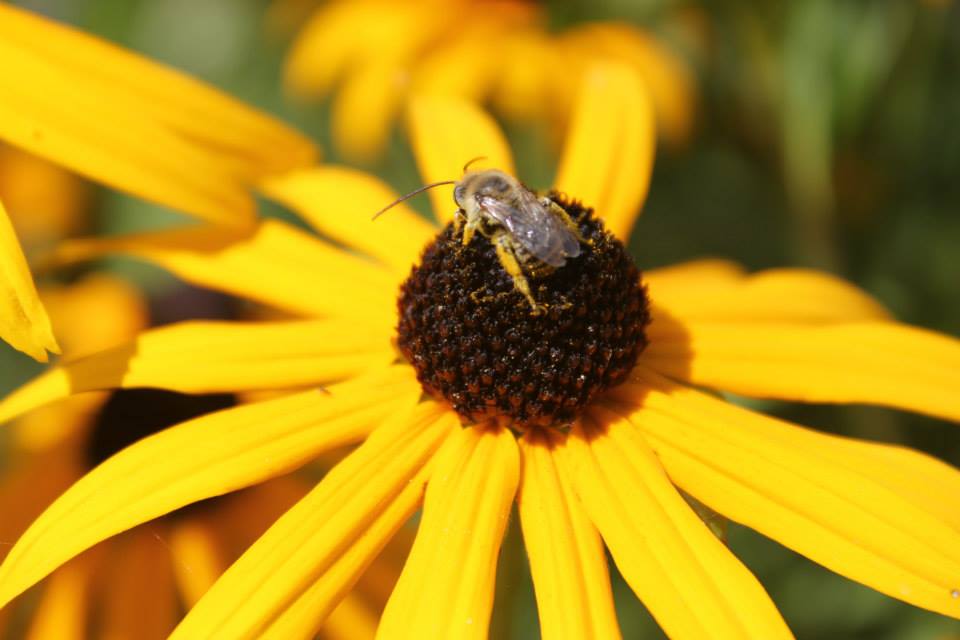
A yellow flower with a pollen-covered bee resting on top.

A bee collecting pollen from a Black-eyed Susan (Rudbeckia hirta).

Though it might not seem like it for some of us who are still in the throes of winter and it especially feels like a distant dream as I look outside my window here in Montana, but Spring is right around the corner. Along with this magnificent season filled with new life in our gardens and landscapes our world will soon be buzzing with pollinators as well!… Continue reading this article “The ABC’s of Plants for Bees!”