Invasive plants, politics and science

I’ve had a hectic week (taxes! financial aid!) and haven’t had a chance to think about posting.  Fortunately, yet another colleague just sent me an interesting link that’s worth sharing and discussing.

For those of you who aren’t familiar with how Master Gardener programs work, they are built on volunteers who receive training in garden-related sciences and then contribute a significant number of hours to outreach education.  Many MGs work in plant clinics, and others volunteer in public gardens. … Continue reading this article “Invasive plants, politics and science”

Interesting and useful web site about invasive insect pests

Just heard about this from a colleague. This website has a link to a great image gallery of exotic insect pests. Though it’s primarily geared towards forest pests, the urban forest is just as susceptible.

Why did the worm cross the road?

…To get to the other side. Of course.

All the rain we’re having is causing the earthworms to crowd the sidewalks and driveways. They fling themselves out of the ground and onto the pavement because they’re drowning, right?  Nope. Urban myth (by the way, why are there no Rural Myths?).  The punchline is not too far off: they can only move about above ground while it’s raining. They use rain events to safely relocate, and can allegedly live for a while in a puddle. … Continue reading this article “Why did the worm cross the road?”

Invasion of the killer earthworms

It sounds like a B-grade horror movie.  Millions of earthworms, moving silently beneath soil, wreaking havoc until the entire planet is uninhabitable.  Sound a little far-fetched?  Not to ecologists that study northern hardwood forests.  While most of us grew up thinking earthworms were ubiquitous, turns out they are not native in parts of North America that were covered with ice during the last glacial period.  Most of us also grew up thinking that earthworms where the good guys/girls (they’re hermaphroditic), churning up compacted soil and leaving nutrient-rich castings behind. … Continue reading this article “Invasion of the killer earthworms”

Genetic Engineering, Veal, and Rennin

Today I thought I’d go just a little off topic. Lots of people out there are really upset about the idea of putting genes into plants, like putting genes for Round-Up resistance into soybeans, or genes for caterpillar resistance into corn. And, I do agree, this is a pretty powerful technology that needs to be used carefully – probably more carefully than it’s being used right now with plants.

But the funny thing is, one of the places where transgenic creatures really dominate the market is in a place that is almost never considered.… Continue reading this article “Genetic Engineering, Veal, and Rennin”

California Flower, Food and Garden Show

I’m giving two talks at the California Flower, Food and Garden Show in Sacramento today and tomorrow: details are linked here. It would be great to meet some of our California readers in person if you plan on being there.

I’ll try to take some photos and share my thoughts about the show on upcoming posts. Maybe I’ll even find my Friday quiz topic lurking there!

Rain barrels

A few weeks ago one of our readers, landscape architect Owen Dell, sent me a link to his blog where he takes on rain barrels. It’s a great analysis of the (im)practicalities of rain barrels and it got me to wondering how many of our readers (and my GP colleagues) use these as supplemental sources of irrigation water?

I have two in our back yard that were made from old olive oil containers retrofitted for collecting and dispensing water.… Continue reading this article “Rain barrels”

Mulch much?

[Try to say post title three times fast. Heh.]

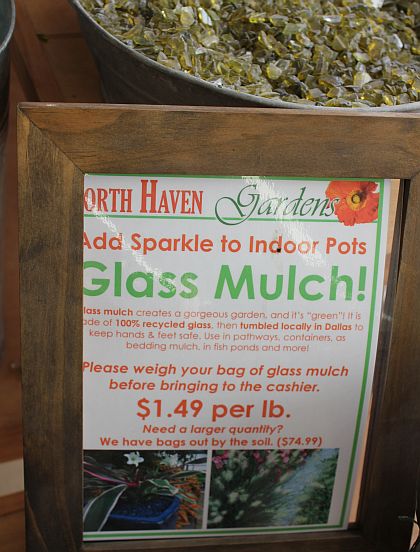
Here on the GP blogski, we’ve discussed both the merits and shortcomings of many non-traditional forms of mulch; rather, stuff that covers the ground that is referred to as mulch. Shredded rubber, marble chips, lava stone, dyed lava stone (ick), etc.

But this is a new one on me:


Naturally, I immediately shoved my hand in the biggest tub of glass (part of the Scientific Method).
Continue reading this article “Mulch much?”

April foolery revisited

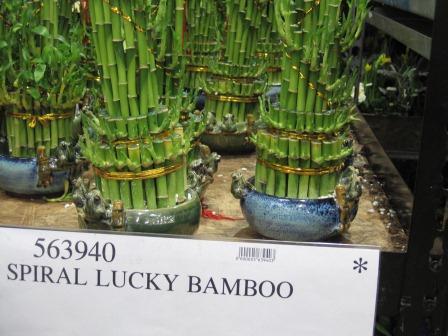
You certainly had fun with this!  Yes, it’s “lucky bamboo,” a name which is completely inappropriate given that it’s not bamboo (but Dracaena sanderiana) and it’s certainly not lucky:

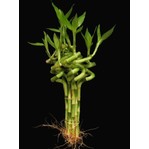
Now “spiral lucky bamboo” is usually dracaena (or as I like to call it “not-bamboo”) that’s been exposed to a unidirectional light source and turned at intervals to create a contorted spiral shape:

These plants, on the other hand, have been cut into straight sections and bound with shiny gold wire in ever increasing lengths so that we have a leaning tower of not-bamboo surrounded by adulating ceramic frogs (good eyes Anne and Jam!). … Continue reading this article “April foolery revisited”

Looking for the lowdown on tree rings

Often we use our blog space as a soapbox from which to pontificate, but today I’m looking for some input from our loyal readers.  Last week I received a note from an editor looking for some words about tree rings.  We’re talking about landscape tree rings for planting annuals or perennials, not dendrochronology.


The editor was interested in specifics on tree rings for large existing trees such as what type of materials to use, what types of flowers or plants worked best, which trees can or can’t have tree rings, etc.  … Continue reading this article “Looking for the lowdown on tree rings”