A short post from our ‘a picture is worth a thousand words’ file. This what we work up to today at Daisy Hill farm 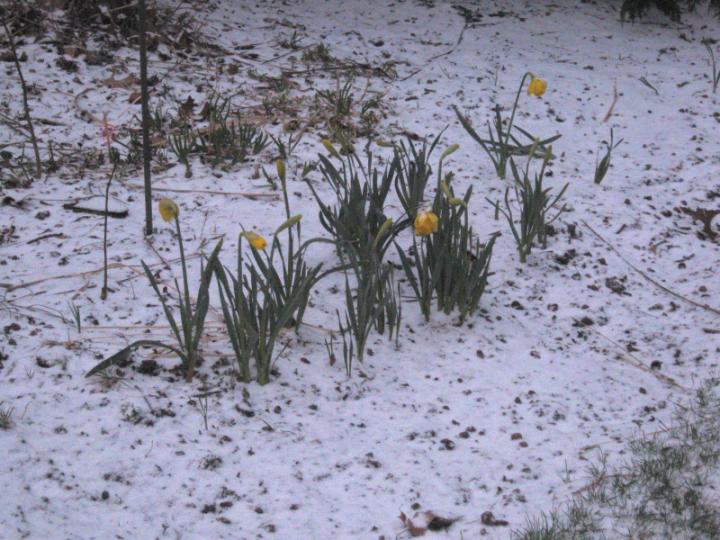
If anyone has seen Spring, please e-mail it some MapQuest directions to Michigan ASAP!
A short post from our ‘a picture is worth a thousand words’ file. This what we work up to today at Daisy Hill farm
If anyone has seen Spring, please e-mail it some MapQuest directions to Michigan ASAP!
It sounds like a B-grade horror movie. Millions of earthworms, moving silently beneath soil, wreaking havoc until the entire planet is uninhabitable. Sound a little far-fetched? Not to ecologists that study northern hardwood forests. While most of us grew up thinking earthworms were ubiquitous, turns out they are not native in parts of North America that were covered with ice during the last glacial period. Most of us also grew up thinking that earthworms where the good guys/girls (they’re hermaphroditic), churning up compacted soil and leaving nutrient-rich castings behind. … Continue reading this article “Invasion of the killer earthworms”
Often we use our blog space as a soapbox from which to pontificate, but today I’m looking for some input from our loyal readers. Last week I received a note from an editor looking for some words about tree rings. We’re talking about landscape tree rings for planting annuals or perennials, not dendrochronology.
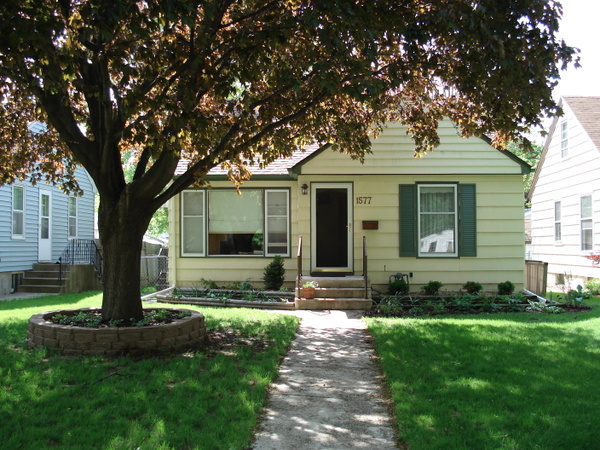
The editor was interested in specifics on tree rings for large existing trees such as what type of materials to use, what types of flowers or plants worked best, which trees can or can’t have tree rings, etc. … Continue reading this article “Looking for the lowdown on tree rings”
Recently I posted that many of the “rules” that gardeners cling to so tightly regarding tree planting (i.e., dig the planting hole 3 times the width of the root ball, always amend the backfill with organic matter) are probably better considered ‘suggestions’ than rules. While these practices won’t hurt, there are much better ways to spend time and effort to ensure long-term survival when planting a tree. Here are the top four:
Irrigate. No matter how much time and effort goes into the ‘perfect’ planting hole; for most parts of the country, trees that are not irrigated after planting are doomed. … Continue reading this article “Keep Calm and Carry On: Part II”
Well, it looks like the climate change skeptics are starting to hedge their bets. Global climate is not changing. But if it does change, it’ll change for the better. At least that’s the gist of a book by the Center for the Study of Carbon Dioxide and Global Change entitled “The Many Benefits of Atmospheric CO2 Enrichment”. The book documents 55 different ways that increasing global CO2 will benefit the world. Most of this is built on studies documenting increases in plant growth and/or photosynthesis associated with increasing CO2. … Continue reading this article “What can CO2 do for you?!”
This past weekend GP Jeff Gillman and I were in Midland, Michigan for two different conferences and had a chance to catch up over dinner (Boulevard burgers – best in Midland) and a couple of cold Bell’s stout ales. It was nice to visit with Jeff since we have so much in common but rarely get to see each other. As you might suspect, our conversation centered on negotiating the perils of the tenure and promotion process at research intensive universities, dealing with bumbling administrators, and, of course, our fellow Garden Professors. … Continue reading this article “Keep Calm and Carry On…”
We typically think of trees as the ‘good guys’; they shade our homes and yards, they take up carbon dioxide and pollutants from the air, they give us oxygen. What’s not to like? Well, like a lot of good guys, trees can also have a dark side. One of the more sinister habits some trees have is getting into sewer lines. Some studies estimate that trees are responsible for up to half of sewer line repair costs. … Continue reading this article “When trees attack!”
A short follow up to last weeks post on girdling roots. Just to reiterate, the point of the post was that we need to be careful not to jump to conclusions when assessing tree problems. It’s important to look beyond the first defect we see and consider additional causes. And to also reiterate, girdling roots can be a serious problem and can lead to tree failures. The photo below shows an example of tree that was both planted too deep and had stem girdling roots. … Continue reading this article “Trees can be good plumbers”
One of the most widely discussed topics in arboriculture and tree care these days is the problem of girdling roots. Virtually every conference or workshop on tree care has a speaker or speakers on how poor planting technique or poor nursery practices lead to girdling roots and their subsequent correlation with poor tree performance, tree failures, global warming, the soaring Federal budget deficit, and the batting average of the Seattle Mariners. Before we go any further let me state categorically that I do not think girdling roots are a good thing; nor do I think any of the consequences mentioned are a laughing matter – especially the Mariners’ batting average. … Continue reading this article “Girdling roots: The source of all evil in the world?”
As those that have followed the blog for awhile are aware, among my pet peeves are some of the naïve statements that are repeated ad nauseam by proponents of native plants for landscaping. You know the usual litany: natives don’t need water, don’t need fertilizer, resistant to insects, resistant to diseases, yada, yada… According to the dogma, native plants possess these traits because they’ve evolved here and they belong here. I hasten to point out; I have nothing against natives and think we ought to plant more of them whenever they are an appropriate choice. … Continue reading this article “Is local always better?”